
Liquid Shim vs
Steel Shim Plates
A structural engineer's comparison
Both fill a structural gap and transfer compressive load.
See how the technical credentials compare.
Machined steel shim plates are a valid specification where the gap is precisely known and fixed well ahead of installation. On an uneven or as-built gap, the challenge shifts from load rating to achieving full, even contact across the bearing footprint.
DIAMANT's MM1018 The Liquid-Shim® is tested to 10 million fatigue load cycles by ibac at RWTH Aachen University, meeting the proof-of-strength standard used for structural steel.
Kubri Engineered Solutions supplies MM1018 and provides the engineering support to specify, install, and document it correctly.
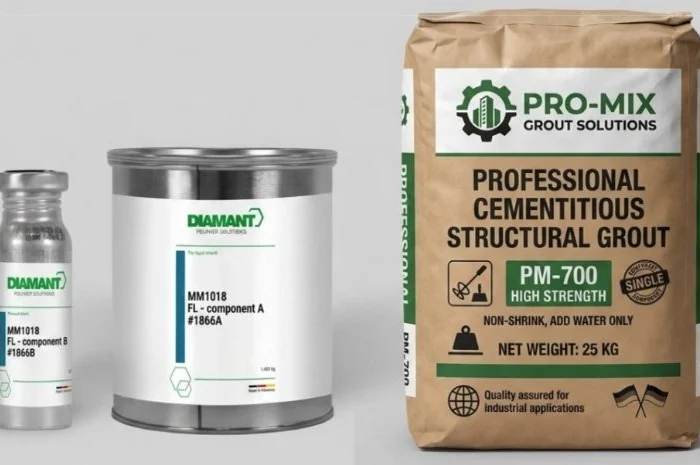
Technical data
MM1018 Liquid Shim vs Steel Shim Plates
The table below sets out DIAMANT MM1018's verified technical properties alongside Steel Shim Plates.
All MM1018 figures are sourced directly from the official DIAMANT Technical Datasheet (#1866).
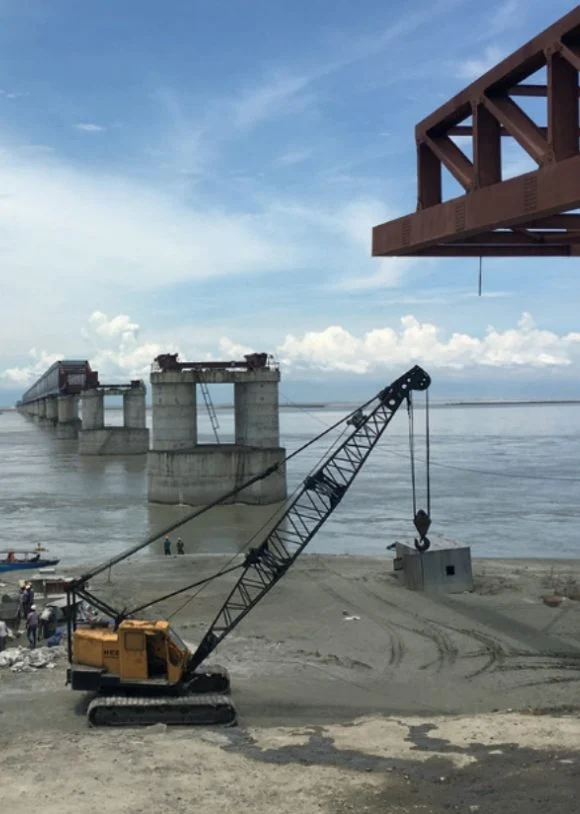
| Property | MM1018 Liquid Shim (FL) | Steel Shim Plates |
|---|---|---|
| Compressive strength | 161 N/mm2 (DIN EN 13412:2006) | Available on request — contact KES for a formal comparison against your current specification. |
| Shrinkage | 0.035% (DIN EN 12617-4:2002) | Available on request — contact KES for a formal comparison against your current specification. |
| Fatigue certification | 10M cycles (ibac RWTH Aachen, M1999) | Available on request — contact KES for a formal comparison against your current specification. |
| Gap range | Up to 140 mm. Ideal for sub-10 mm precision micro-gaps | Available on request — contact KES for a formal comparison against your current specification. |
| Structural approval | abZ Z-3.82-2042, DIBt (Germany) | Available on request — contact KES for a formal comparison against your current specification. |
| Cure time to full load | 24 hours at 20°C | Available on request — contact KES for a formal comparison against your current specification. |
| Service temperature | -20°C to +50°C (per abZ Z-3.82-2042) | Available on request — contact KES for a formal comparison against your current specification. |
| Full-surface contact | Yes. 100% void fill; cures bonded to both surfaces | Available on request — contact KES for a formal comparison against your current specification. |
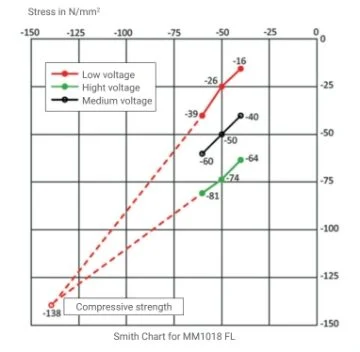
Fatigue certification
The decisive factor on dynamic load applications
While static compressive strength is a widely cited specification parameter, it isn’t the governing parameter on cyclic load applications. On a bridge bearing, a rotating equipment foundation, a crane runway, or a wind turbine flange, the governing design case is fatigue: the material must sustain its structural integrity through millions of repeated load cycles without failing.
MM1018 FL was subjected to independent fatigue testing by ibac (Institut für Bauforschung) at RWTH Aachen University, sustaining 10 million load cycles at mean stresses of 40, 50, and 60 N/mm2, with no visible damage or cracking observed. Ten million cycles is the proof-of-strength benchmark used in EN 1993-1-9 for structural steel.
Individually machined plates are typically rated to standard structural steel design codes rather than tested as an assembled interface system — confirm your specific plate specification’s basis of design, or contact KES for a formal comparison.
Application guide
When to
specify which
Standard Scenarios for Steel Shim Plates
Steel Shim Plates may remain the correct, cost-effective specification for:
- Gaps that are precisely known and fixed well ahead of the installation programme.
- Projects where fabrication lead time is already built into the programme.
- Interfaces outside MM1018's tested 140 mm maximum gap — confirm against the datasheet.
High-Demand Scenarios for MM1018 Liquid Shim
MM1018 is the correct specification where the interface is governed by fatigue, tolerance, or programme:
- Cyclic and dynamic load: Bridge bearings, crane runways, rotating plant, and tower flanges, backed by 10 million certified load cycles.
- Precision micro-gaps: Sub-10 mm interfaces where hand placement cannot be relied on.
- Full-surface contact requirements: Where 100% void fill bonded to both surfaces is a design assumption.
- Short shutdown windows: Full load capacity in 24 hours at 20°C, with no wet trades on site.
Frequently asked questions
Where the gap is already precisely known, uniform, and fixed well ahead of installation, machined plates remain a valid specification. MM1018 is typically preferred when the as-built gap is uneven, unknown until exposure, or the programme has no allowance for fabrication lead time. Send us your interface details and we’ll confirm which applies.
MM1018 is a two-component polymer: it cures by chemical reaction between resin and hardener, and reaches full load capacity in 24 hours at 20°C (16 hours at 30°C).
Yes. Send your current specification and interface details through the contact form below and a KES engineer will respond with a formal technical comparison within one business day.
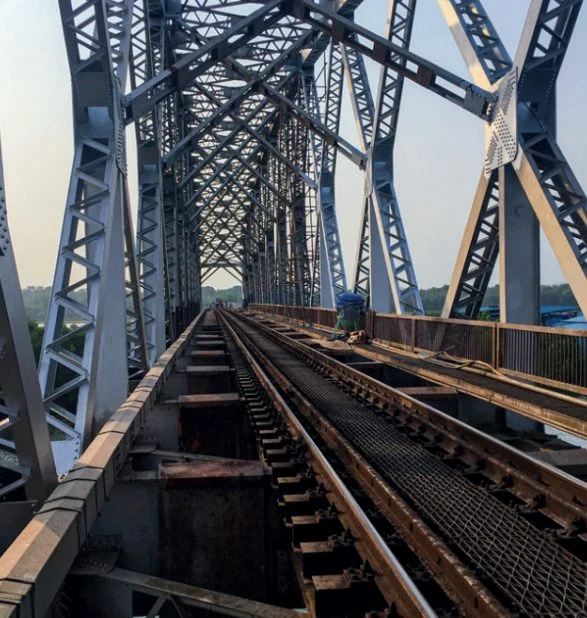
Engineering authority.
Australian support.
Moving from your current specification to MM1018 will affect how the interface is designed, how work is sequenced on site, what gets inspected, and the evidence an asset owner needs. If those pieces are not engineered together, the risk simply moves from the material to the engineer’s desk.
Helping you mitigate that risk is Kubri Engineered Solutions, Australia’s dedicated technical authority for liquid shim technology.
Kubri Engineered Solutions is the Australian partner for DIAMANT Polymer GmbH, manufacturer of MM1018 The Liquid-Shim®, and holds exclusive technical partnerships with globally recognised manufacturers, including Maurer (expansion joints, structural bearings), Panacor (noise barriers, fire protection walls), and EarthTec (reinforced retaining walls).
KES supports your specification by supplying a complete engineering support package:
Design Support:
Interface review and product-variant selection (FL, P, or Smart S) matched to the gap geometry.
Installation Methodology:
Preparation of method statements covering sealing, injection layout, and QA checkpoints.
Interface Control:
Specification of the complete system, including MM1018 SEAL and dedicated injection hardware.
Documentation:
Provision of material certification, batch traceability, and abZ approval documentation formatted for ITPs and asset registers.
For a full technical overview of liquid shim technology and applications,
visit the Liquid Shim Australia resource centre.
Talk to a KES engineer
Send us your connection details. A KES engineer will respond within one business day with the correct product selection, installation methodology, and a ready-to-insert specification clause.